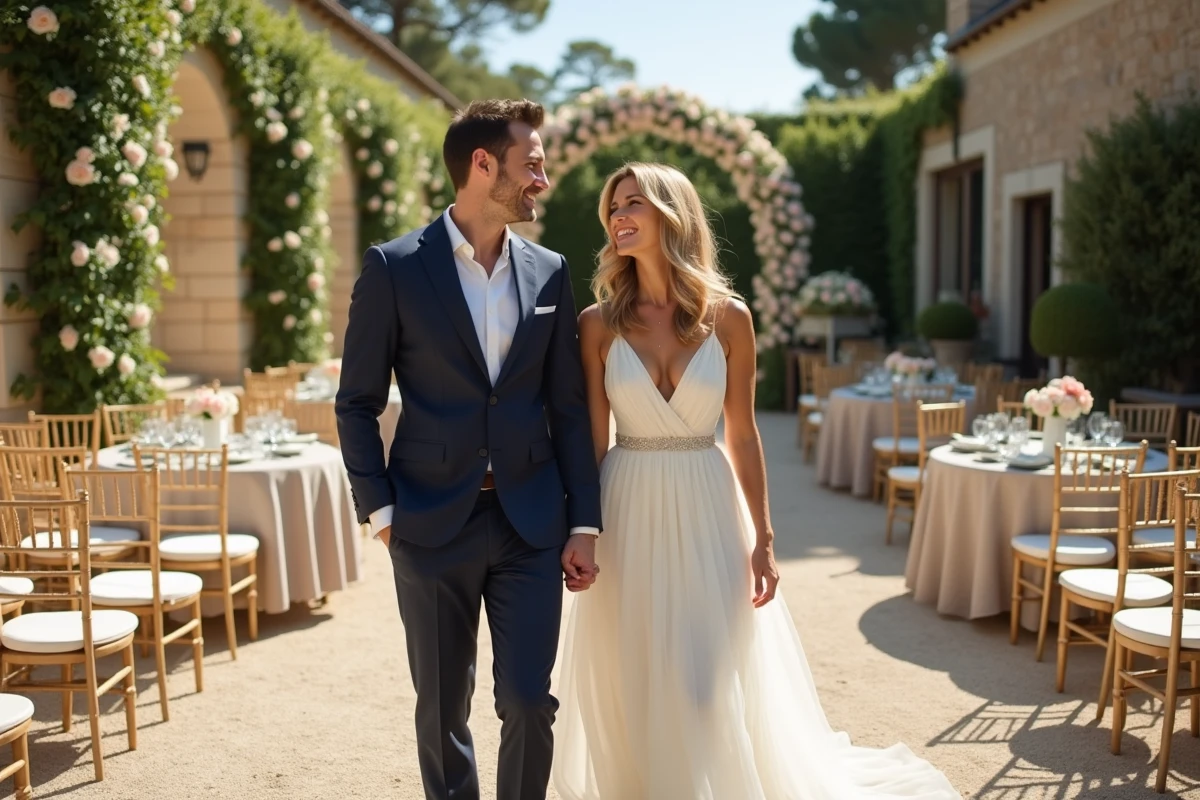
The organization of a dream wedding relies on concrete trade-offs, not on a wish list. Between the documented increase in catering prices since 2022, the upgrade related to smaller formats, and regulatory constraints on reception venues, every decision impacts the final outcome. These 10 tips target the areas where cost or quality discrepancies are most pronounced.
1. Allocate the wedding budget by category before making any bookings

The Federation of Caterers of France reports a significant increase in catering prices between 2022 and 2023, driven by rising raw material and labor costs. This trend is expected to continue in 2024. The catering category, the reception venue, and photography/video are the three areas most under pressure.
A fixed overall budget without breakdowns by category leads to cascading overruns. It’s better to establish a distribution table from the start, with a safety margin allocated to the most volatile categories. Specialized resources like conseils-mariage.net help structure this step with benchmarks suited to the current French market.
2. Set the guest count to guide all other choices

The UMIH notes in its 2023-2024 observatory of private events a decrease in the number of guests per wedding, offset by an upgrade in services per person. This shift towards formats of 30 to 50 guests (micro-weddings or “minimonies”) redistributes the budget: fewer guests frees up budget per head for gastronomy, accommodation, or the venue.
Before choosing a venue or caterer, finalize a firm guest count. It determines the format of the ceremony, the size of the room, and the cost of the meal.
3. Secure the reception venue with a technical visit

A venue that looks appealing in photos can pose logistical problems on the big day: access for the catering truck, electrical power for sound systems, a backup plan in case of rain for an outdoor ceremony. Visiting the site at least twice, including once with the caterer or coordinator, reduces unpleasant surprises.
Regulations on establishments receiving the public (ERP standards) impose constraints on capacity, accessibility, and fire safety. Ensuring that the venue is compliant before signing avoids last-minute administrative blockages.
4. Negotiate the catering quote on high-margin items

The catering category remains the most significant expense in most weddings. The increase documented by Traiteurs de France makes negotiation more challenging, but some levers remain active: reduce the number of hors d’oeuvres at the cocktail rather than cutting back on the main dish, prioritize seasonal products, or combine the cocktail and meal into a single format.
Requesting a detailed line-by-line quote, rather than a global package, allows for the identification of high-margin items (beverages, pastries, extra service) and adjustments without sacrificing the quality perceived by guests.
5. Create a reverse timeline from the big day

Working backwards from the wedding date structures priorities. Venue and caterer bookings typically occur more than a year in advance. Stationery, decoration, and outfits are organized in the six to eight months leading up to the event. The final month focuses on coordinating the vendors.
A reverse timeline shared between both partners and, if applicable, the wedding planner, avoids duplicates and oversights. The tool can be as simple as a spreadsheet with columns for each month.
6. Write a detailed schedule for the big day

The schedule for the big day differs from the preparation reverse timeline. It is a minute-by-minute guide covering the arrival of vendors, the preparation of the couple, the ceremony, the cocktail, the meal, the entertainment, and the evening.
Distributing this guide to each vendor and the witnesses prevents delays. Wedding planners recommend allowing fifteen to twenty minutes between each transition to absorb delays without visible stress.
7. Choose the decoration based on the venue, not the other way around

Applying a decorative theme to a venue that doesn’t suit it inflates costs and weakens the overall effect. A venue with raw stone does not call for the same palette as an urban loft. Adapting the ambiance to the character of the venue reduces the amount of decoration needed and creates a natural visual coherence.
Elements to prioritize:
- The color palette, aligned with the existing materials of the venue (wood, stone, metal)
- The type of flowers, chosen based on the season to limit import costs
- The ambient lighting, often more structuring than table centerpieces
8. Centralize communication with vendors

Multiplying channels (email, phone, instant messaging, social media) disperses information. A vendor receiving contradictory instructions through two different channels risks delivering an inconsistent result.
Designating a single channel per vendor and a primary contact (one of the couple or the coordinator) simplifies follow-up. A shared folder containing all signed quotes, confirmations, and schedules for the big day completes the setup.
9. Prepare a practical sheet for witnesses and close family

The witnesses and close family play an operational role on the wedding day: welcoming guests, coordinating activities, managing minor unforeseen issues. Providing them with a concise sheet containing vendor contacts, the schedule, and specific instructions avoids constantly bothering the couple.
This sheet fits on one page:
- Key times of the day and associated locations
- Phone numbers for the caterer, DJ, and coordinator
- List of delegated tasks (transporting the cake, managing the ballot box, seating plan)
10. Mentally rehearse the complete flow the day before

Visualizing each sequence of the day, from getting dressed to the departure of guests, helps identify blind spots: an underestimated journey between the town hall and the reception venue, too short a time slot for group photos, a lack of signage for parking.
This review takes only about twenty minutes and serves as a final filter. It complements the schedule by incorporating sensory details that written documents do not capture: the light at a certain hour, the ambient noise, the expected traffic.
The organization of a wedding hinges on the quality of the trade-offs made in advance, not on the volume of accumulated details. The categories under the most significant pricing pressure (catering, venue, photography vendors) deserve the earliest attention. The rest follows, provided that the guest count and budget are locked in from the start.