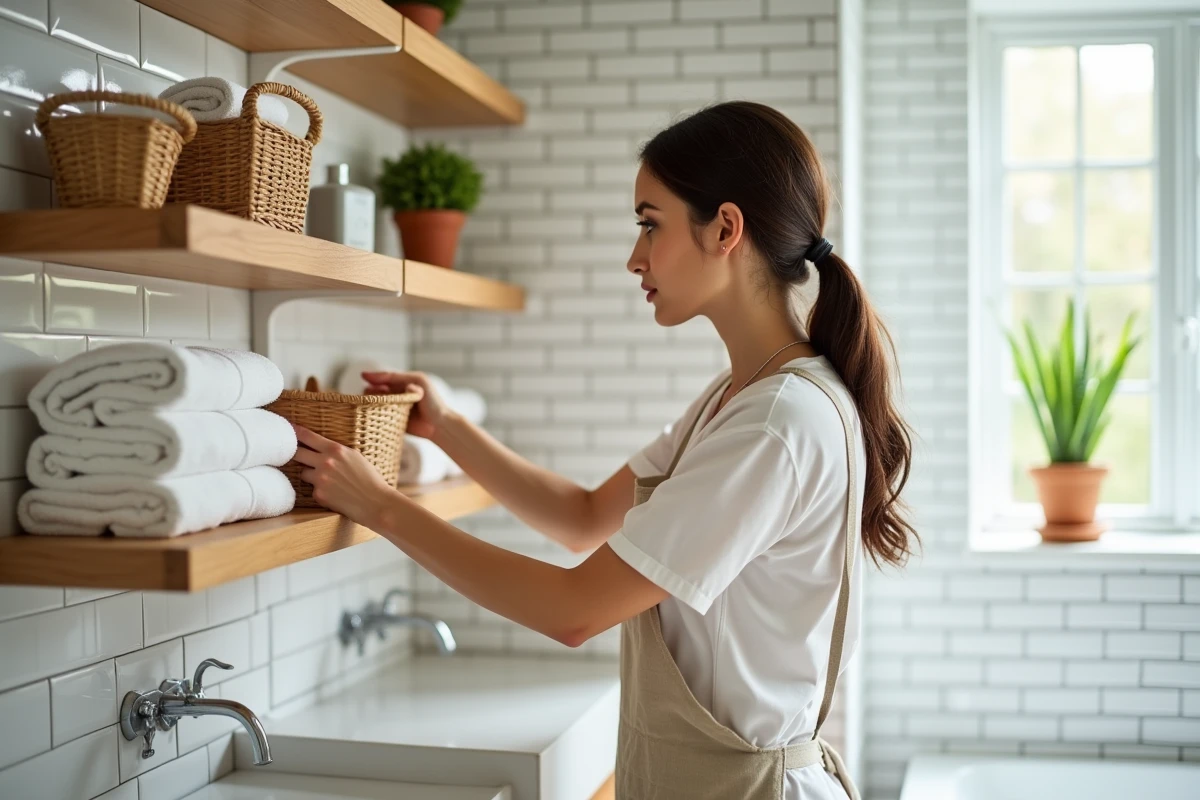
Organizing an interior is no longer just about sorting cupboards or buying matching storage boxes. Recent approaches favor a logic of functional zones rather than a room-by-room breakdown. The goal: to reduce daily friction by adapting each space to its actual use, not to a fixed aesthetic norm. A pleasant and well-organized home relies on concrete choices of furniture, circulation, and maintenance, much more than on general decorative principles.
Organizing your home by usage zones, not by room
Most organization tips start from a classic breakdown: kitchen, living room, bedroom, bathroom. This approach overlooks a common problem in current housing, often compact or multifunctional. The same room can serve as an office, dining room, and play area.
The zone-based approach relies on four functions: drop-off, preparation, storage, cleaning. The entryway concentrates the drop-off zone (keys, mail, shoes). The kitchen combines preparation and cleaning. A corner of the living room can become a temporary storage zone if a low cabinet with compartments replaces the classic side table.
This logic allows you to find information on Autour 2 Moi detailing how to adapt interior layouts to the real constraints of a home, without multiplying unnecessary purchases.
The main gain is not visual. Grouping items by action reduces the time spent tidying up after use. Putting away the remote control, magazines, and cushions takes just a few seconds when everything has a defined place within a one-meter radius. Without a clear zone, these items migrate from one room to another and accumulate.
Light and colors: two underestimated levers for a pleasant interior
A well-organized space that is dark or poorly lit does not invite you to stay. Natural light remains the primary factor of comfort in a living space. Clearing windows, avoiding opaque curtains during the day, and placing tall furniture perpendicular to light sources radically changes the perception of a living room or kitchen.
Artificial lighting as a complement
A single ceiling light creates a flat ambiance. Multiplying light sources (reading lamp, strip under a tall piece of furniture, wall sconce) allows you to modulate the atmosphere according to the time and activity. Three light points per living space are enough to create a modifiable ambiance.
The role of colors in the perception of space
Light shades visually enlarge a space, a documented fact in interior decoration. However, the available data does not allow us to conclude that a specific color universally improves productivity or sleep. Field feedback varies on this point.
What works reliably: limiting the palette to two or three dominant colors per room to avoid visual overload. An accent wall in a bolder shade can structure a large open space without partitioning.
Storage and furniture: prioritize easy maintenance over design alone
The current trend in home organization is moving away from purely decorative furniture. The most suitable furniture for a fluid daily life is that which cleans quickly, closes, and whose contents remain accessible without complex manipulation.
- Closed furniture (buffets, dressers, cabinets with doors) hides residual clutter and reduces dust on stored items, which decreases cleaning frequency.
- Open shelves are suitable for items used multiple times a day (everyday dishes, books in progress), but they require regular sorting to avoid becoming accumulation surfaces.
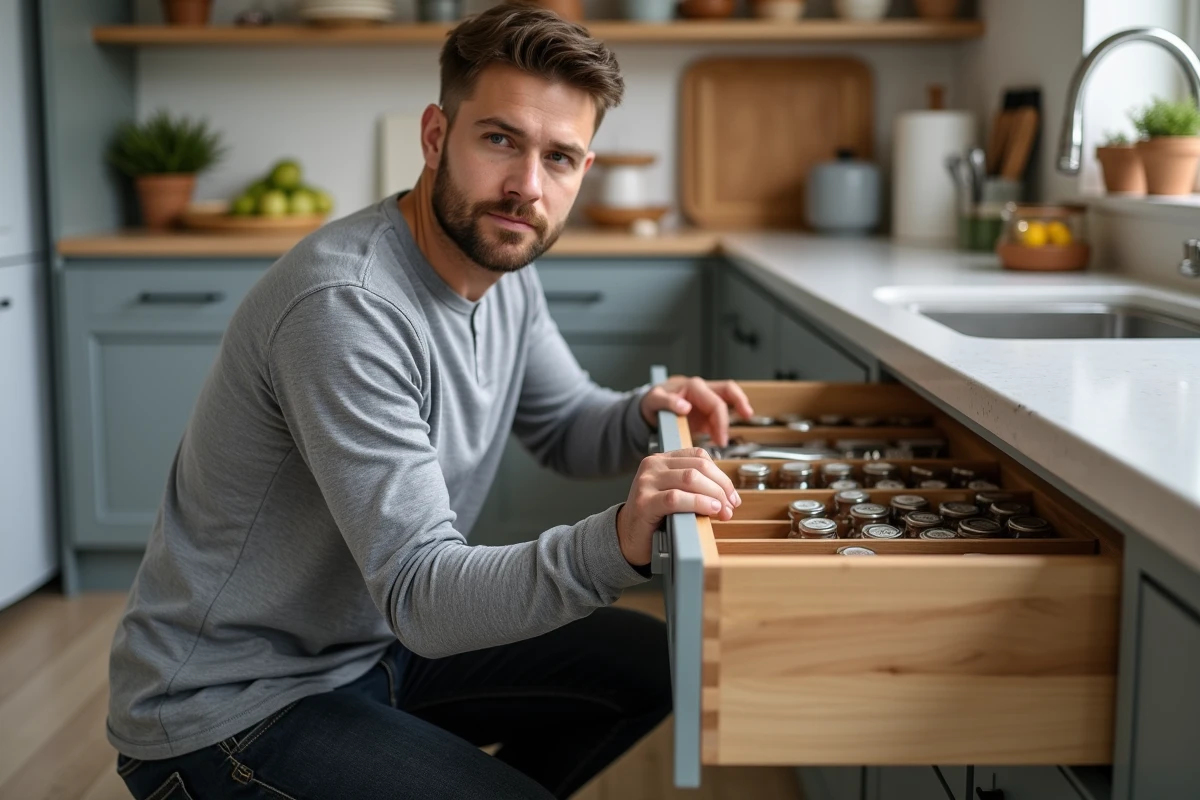
- Vertical storage (hooks, magnetic strips in the kitchen, coat hooks in the entryway) frees up countertops and floors, two surfaces whose clutter directly affects the perception of cleanliness.
- Uniform containers (baskets, boxes of the same size) simplify visual storage without requiring meticulous sorting of contents.
A piece of furniture that closes and cleans in one motion is better than a photogenic open piece. The choice of furniture directly influences the time spent maintaining order, much more than the storage habits themselves.
Ease of daily maintenance: what really makes a difference
Articles on home organization often list fragmented cleaning routines. The principle is known: a few minutes a day rather than a long session on the weekend. What is less often discussed is how the layout choices made in advance make these routines more or less realistic.
Reducing free horizontal surfaces
Every unassigned flat surface becomes a magnet for objects. An entry console without a defined catch-all fills up with mail in a few days. Assigning a unique function to each horizontal surface limits passive accumulation. If a coffee table is used solely to hold two candles and a remote control, it remains clear without conscious effort.
The link between organization and materials
Smooth surfaces (tiles, laminate, glass) clean faster than textured surfaces (raw wood, fabric, rattan). In a kitchen or bathroom, this criterion should weigh as much as aesthetic considerations in the choice of coverings and furniture.
The floor plays a comparable role. A clear floor can be vacuumed in a few minutes. A floor cluttered with baskets, plants on the ground, or small low furniture multiplies cleaning time and discourages frequent passes.
Ultimately, organizing a pleasant home comes down to concrete trade-offs: usage zones rather than partitioned rooms, closed furniture rather than open shelves, smooth and assigned surfaces rather than tempting free spaces. These structural choices, made once, sustainably lighten the maintenance burden, where storage routines alone often end up wearing thin.