
A wood drill that burns the material instead of cutting it, produces splinters at the entrance of the hole, or deviates from its trajectory indicates a sharpening problem. Sharpening a wood drill at home does not require professional equipment, but a precise understanding of what distinguishes this type of drill from a metal drill, and the mistakes that ruin the sharpness faster than wear itself.
Wear Diagnosis of a Wood Drill: What the Cut Reveals
Most sharpening guides assume that the drill cuts poorly. The problem is often identified too late. Recognizing the signs of wear before the drill becomes unusable helps limit the amount of material to be removed during sharpening, thus preserving the original geometry.
Wood burning, splinters at the entrance, and an ovalized hole are three distinct symptoms that do not point to the same defect. Burning indicates excessive friction of the lips, often caused by an insufficient clearance angle. Splinters at the entrance signal dull outer edges. An ovalized hole indicates asymmetry between the two lips, which misaligns the centering point.
Before touching the grinder, examining the drill under good lighting while rolling it between your fingers allows you to visually spot any asymmetry. If you are looking for tips for sharpening a wood drill suitable for different types of bits, this diagnostic step remains the starting point not to be skipped.
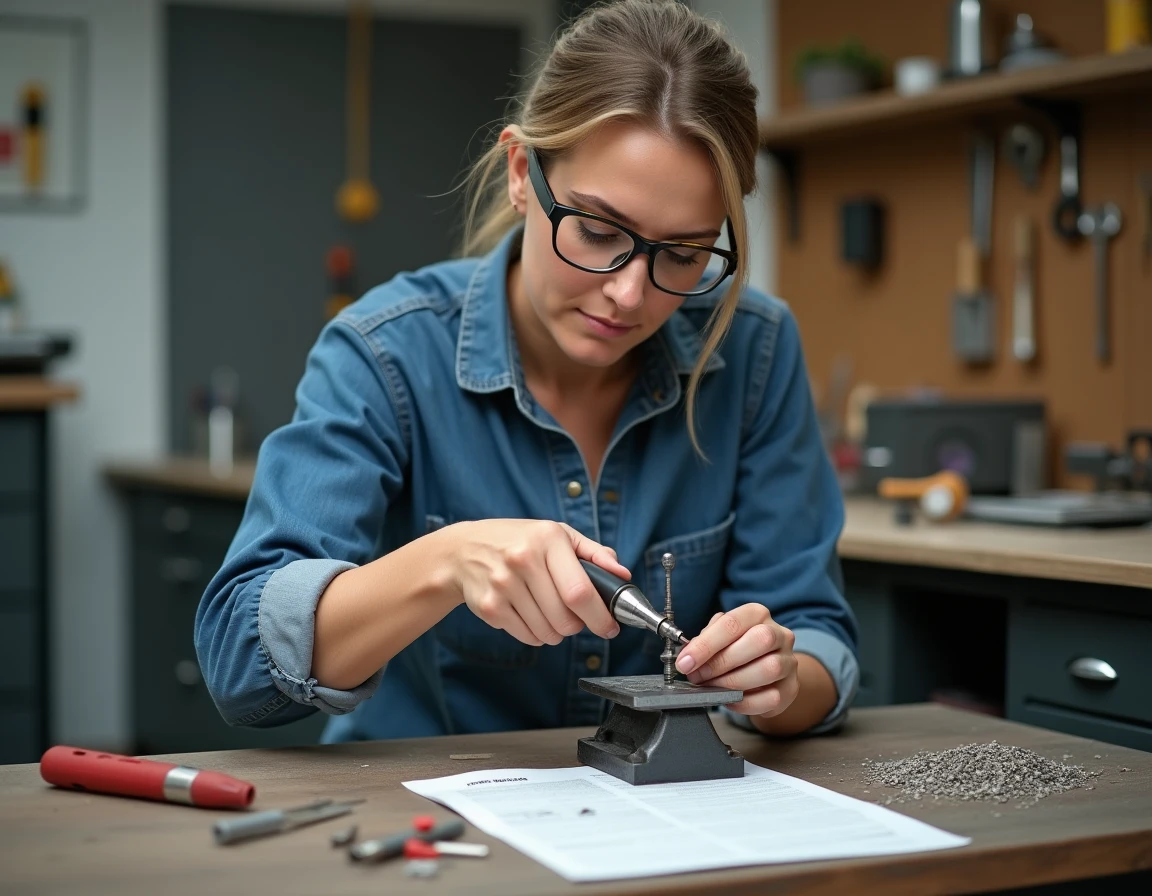
Wood Drill and Metal Drill: Sharpening That Follows Different Rules
Specialized wood drills (centering point bits, three-point drills) have a more forgiving geometry than a helical drill for metal. The centering point guides the drilling, the outer lips cut the fibers, and the inner lips evacuate the chips. This distribution of functions means that a small defect on an inner lip will not have the same impact as on a metal drill, where the entire cut relies on two symmetrical edges.
This difference has a direct consequence for home sharpening: aiming for functional sharpening is sufficient for wood, whereas metal requires an almost perfect profile. A slightly asymmetrical wood drill will drill cleanly if the centering point remains well aligned and if the outer lips cut the fibers without tearing them.
| Criterion | Wood Drill (3 points) | Metal Helical Drill |
|---|---|---|
| Tolerance to Asymmetry | Moderate (the centering point compensates) | Low (immediate deviation) |
| Main Risk in Sharpening | Dulling the outer lips | Loss of edge symmetry |
| Recommended Tool at Home | Fine diamond file or sharpening stone | Bench grinder with support |
| Standard Point Angle | Variable depending on the type of bit | Generally standardized |
The table highlights a point that generic sharpening tutorials often overlook: the suitable tool is not the same. A bench grinder, perfect for a metal drill, can remove too much material from the fine lips of a three-point wood drill.
Overheating of the Drill During Sharpening: The Trap That Destroys Geometry
Overheating remains the number one risk of home sharpening. On a grinder or a sander, the temptation is to hold the drill against the wheel until a visible edge is achieved. A few seconds too long are enough to blue the steel, a sign that the hardening is compromised.
The problem is not limited to the loss of hardness. Localized heating deforms the geometry of the drill in a way that is imperceptible to the naked eye. The result: a drill that seems sharpened but drills crookedly or vibrates in the chuck.
The solution relies on three principles that recent specialized guides emphasize:
- Work in short passes of two to three seconds, removing the drill from the wheel between each pass to let the steel cool in the open air
- Regularly dip the drill in a container of cold water, except for tungsten carbide drills where thermal shock can cause micro-cracks
- Visually check the color of the steel after each pass: a light straw reflection is acceptable, while blue or purple indicates irreversible overheating
If the steel has turned blue, the affected area must be completely ground away to reach healthy metal, which shortens the drill and potentially alters its balance.
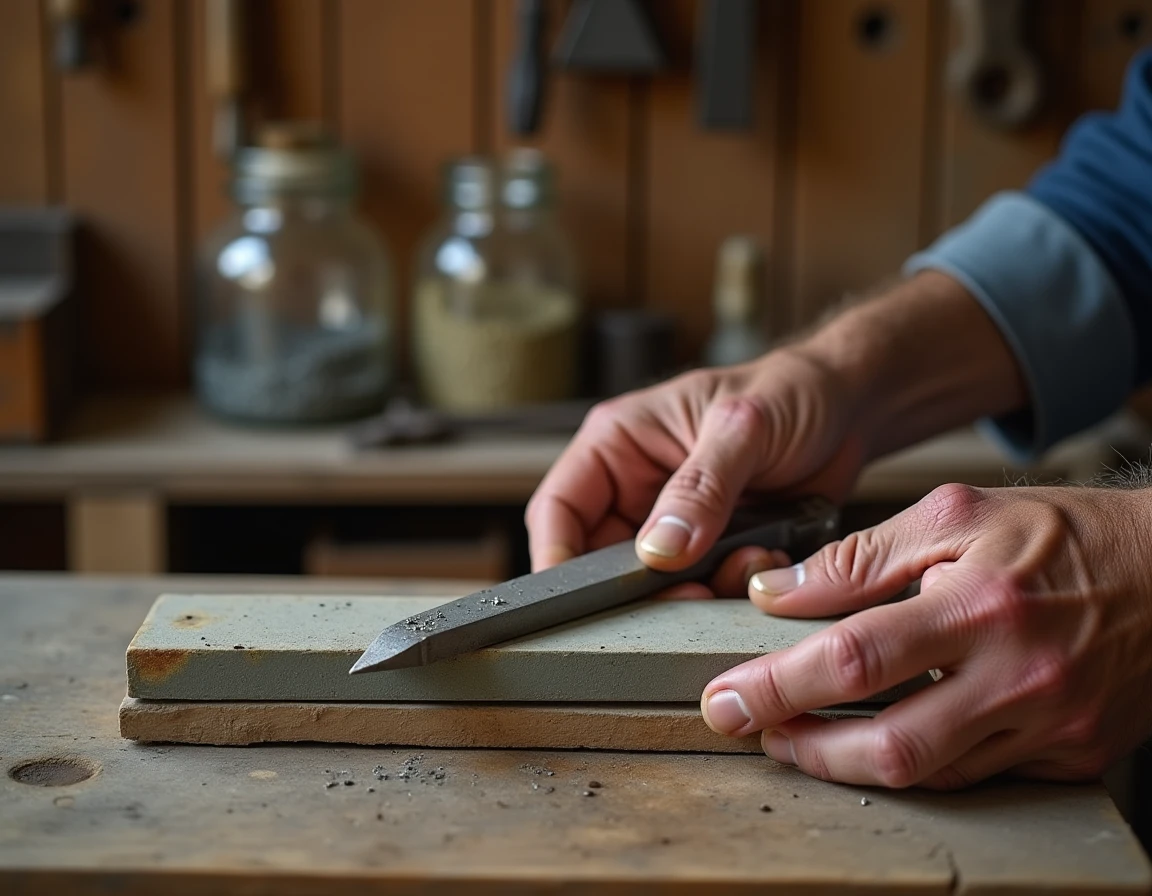
Sharpening Jig or Freehand Method: Repeatability vs. Intuition
Freehand sharpening, with the drill held by hand against the wheel, remains the most common method in workshops. It works on large diameter drills, where the grip is stable and the angle can be visually controlled. Below a certain diameter, precision drops and asymmetry between the lips becomes nearly systematic.
Jigs and angle guides, whether commercially available or homemade, provide a repeatability that the hand alone cannot guarantee. The principle is simple: a support fixes the angle between the drill and the wheel, producing two identical lips pass after pass.
- A commercial angle guide attaches to the grinder’s support and holds the drill at the desired inclination, eliminating the human factor on the point angle
- A homemade jig made of wood or metal, cut to the desired angle, serves the same function at a negligible cost
- For three-point wood drills, a flat diamond file used lip by lip offers fine control that a rotary grinder does not allow
The file method is slower, but it eliminates the risk of overheating and is particularly suitable for wood drills whose outer lips are fragile. The fine diamond file is the most underestimated tool for sharpening wood drills at home.
The choice between these methods primarily depends on the diameter of the drill and the frequency of sharpening. For occasional woodworking use, the file and a simple jig cover most needs without investing in a dedicated grinder. The real gain lies less in the tool than in the consistency of the action and the thermal control of the steel.