Garden flowers are no longer chosen solely for their aesthetics. The ban on synthetic pesticides for individuals (Labbé law) and recommendations from water agencies encourage the creation of flowerbeds that provide benefits: welcoming pollinators, limiting watering, and lasting several years without replanting. This framework modifies the plant palette of French gardens and deserves a close look at what truly works in the ground.
Soil and exposure: what determines the choice of varieties
Before browsing a catalog, the first useful reflex is to observe the terrain. A clayey soil that retains water after each rain is not suitable for the same flowers as a sandy, draining soil. Planting lavender in heavy, damp soil leads, in one or two winters, to a rotting plant.
Exposure also influences the debate. A south-facing facade in a Mediterranean zone points towards drought-resistant perennials (gauras, yarrow, perovskias). A north-facing or partially shaded bed opens the way for hydrangeas, astilbes, or heucheras, which do not tolerate prolonged direct sunlight well.
These two parameters, soil and light, automatically eliminate half of the references from a garden center. This is a time and money saver. For more in-depth information, there are practical tips on Info Jardinage that detail the needs by species.
Bee-friendly perennials: garden flowers that work all year round
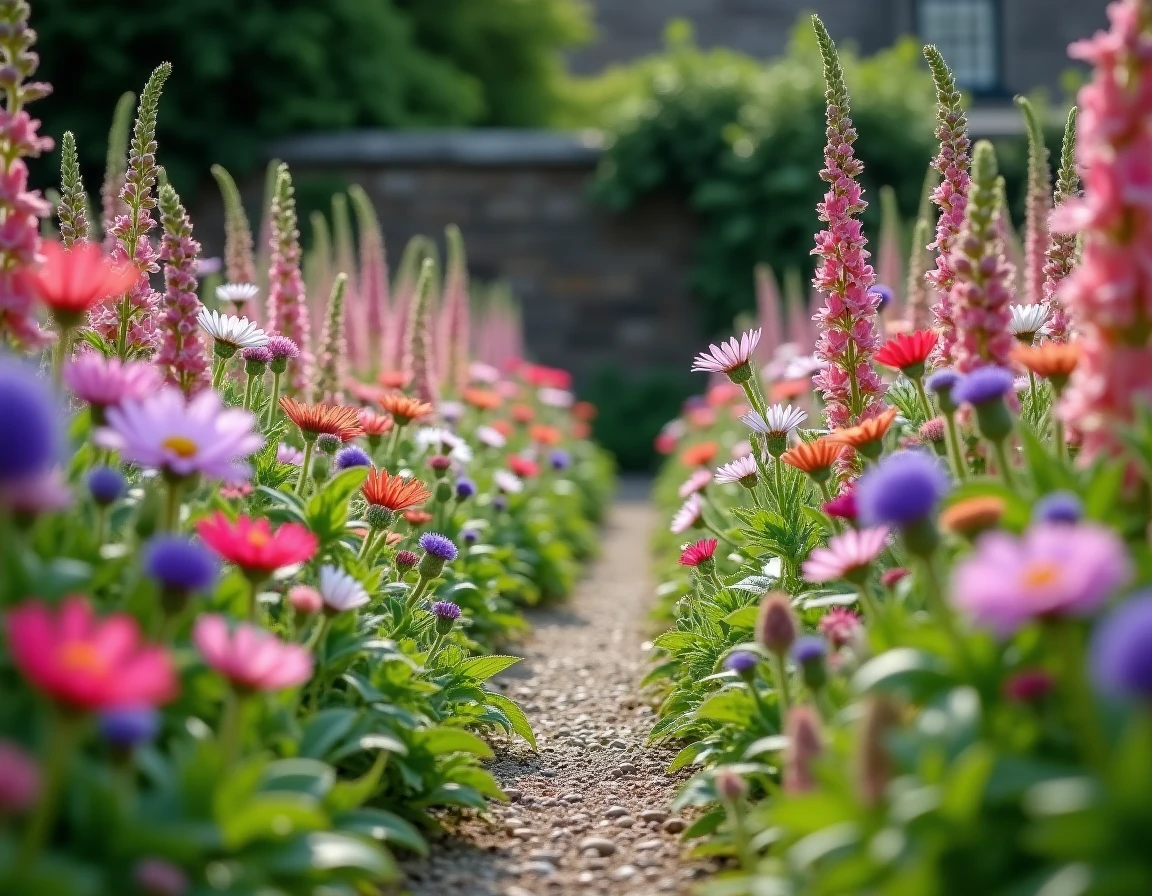
The French Office for Biodiversity explicitly recommends structuring flowerbeds and borders with bee-friendly flowers: nepeta, lavender, ornamental sages, Buenos Aires verbena. The goal goes beyond decoration. These plants nourish bees, bumblebees, and hoverflies over extended flowering periods.
A combination of three or four perennials with staggered bloom times covers the season from March to October. Wood sage blooms as early as spring, nepeta takes over in June, and Buenos Aires verbena lasts until the first frosts. This type of floral succession works without any intervention other than light pruning at the end of winter.
Why perennials cost less than annuals over three years
A bed of annuals (petunias, impatiens, begonias) is renewed each spring. The cumulative cost of plants, potting soil, and planting time far exceeds that of a bed of perennials installed just once. Well-chosen perennials remain in place for several years and gain in volume each season.
Field reports vary on this point for certain species known to be perennials but not very hardy in continental climates (gauras in the northeast, for example). Checking the hardiness zone remains a basic precaution.
Water-efficient flowers: adapting your garden to summer restrictions
Several local authorities, particularly in Provence-Alpes-Côte d’Azur and Occitanie, have been publishing lists of drought-resistant flowers for private gardens for several years. Water agencies encourage reducing lawn areas in favor of perennial beds that are low in watering needs.
Among the species mentioned in these recommendations:
- Cistus and santolinas, low shrubs that require no watering once established, even in full southern sun.
- Yarrow, which withstands weeks without rain and offers prolonged flowering in yellow, pink, or white.
- Euryops, native to South Africa, whose bright yellow blooms last from spring to autumn with well-draining soil.
- Perovskias (or Russian sage), whose blue-purple spikes pair well with ornamental grasses.
The principle of xeriscaping does not mean giving up colors. It simply requires grouping plants by water needs to prevent a drought-tolerant perennial from being drowned by watering intended for its neighbor.
Spring and autumn bulbs: a calendar often misunderstood
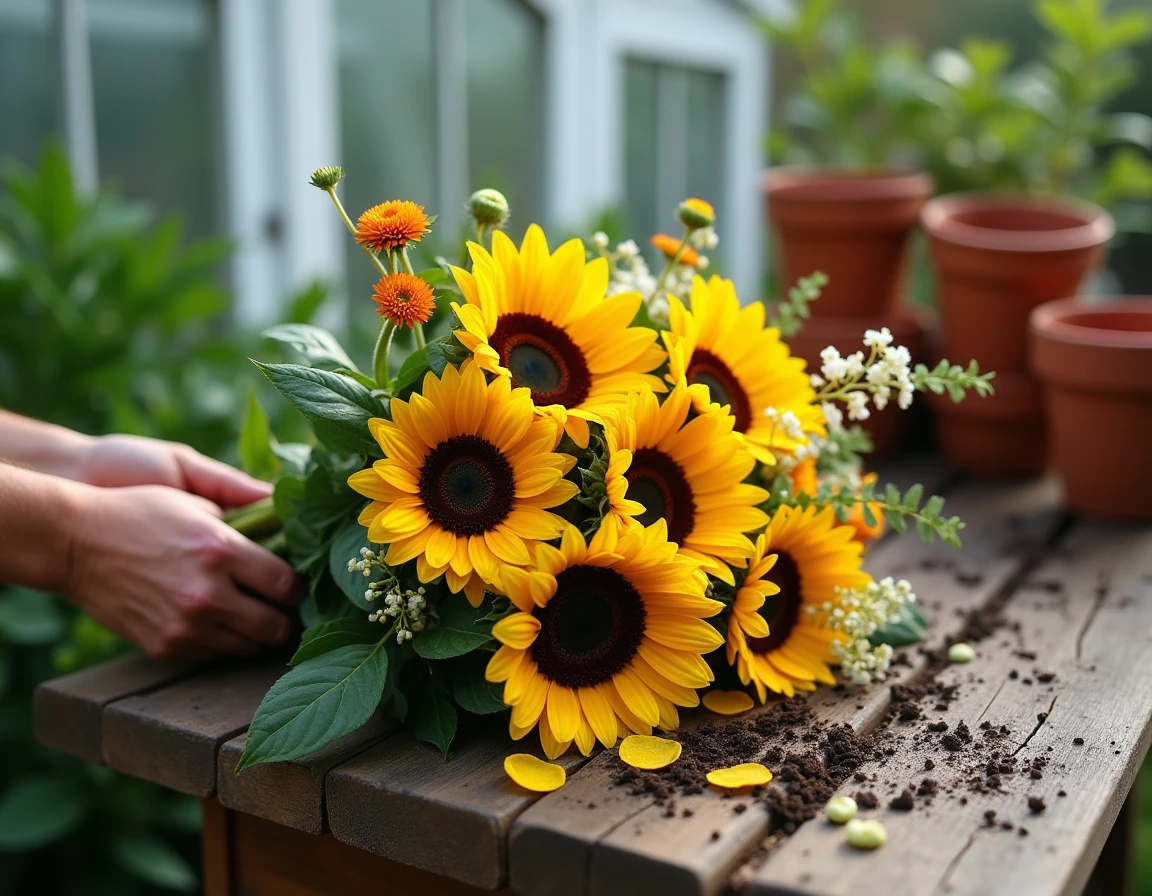
Bulbs generate confusion because their planting calendar is reversed compared to their flowering. Tulips, daffodils, and crocuses are planted in autumn to bloom in spring. Dahlias and gladioli are planted in spring to bloom in summer.
Missing this planting window condemns the bulb. A bag of tulips bought in March and planted immediately will yield nothing, or almost nothing. The cold rooting period is a physiological condition, not a logistical detail.
Conservation and naturalization of bulbs
Some bulbs naturalize: left in the ground, they return each year and multiply. Daffodils and botanical crocuses are the most reliable for this use. Horticultural tulips, on the other hand, often exhaust themselves after two or three seasons and need to be replaced.
Allowing the foliage to yellow naturally after flowering enables the bulb to rebuild its reserves. Cutting the leaves too early for aesthetic reasons compromises the next flowering.
Maintenance of garden flowers: what really matters
Mulching remains the most cost-effective technique in terms of time and results. A layer of organic mulch (wood chips, straw, dead leaves) limits evaporation, slows down weeds, and nourishes the soil as it decomposes. A properly applied mulch significantly reduces watering and eliminates a good portion of manual weeding.
Watering at the base, early in the morning, avoids fungal diseases that develop on damp foliage at night. A microporous hose placed under the mulch is more effective than an oscillating sprinkler that wets the flowers and foliage without properly reaching the roots.
The last often overlooked point concerns the pruning of perennials. Cutting back clumps at the end of winter (February-March) stimulates regrowth and maintains a compact habit. Waiting until late spring risks cutting already formed buds.
Choosing garden flowers based on soil, exposure, and local climate produces more sustainable results than following the visual trends of a season. The most successful beds share a common trait: each plant occupies the place that suits it biologically, not the one assigned to it on a decorative plan.