
On a renovation site on the ground floor, the question often arises: how to bring light into a dark room without creating a direct view with the neighbor? The fixed glass, that is to say, a fixed glazing sealed in a frame that does not open, perfectly meets this need.
It can be found both on side façades and in stairwells, halls, or partially glazed partition walls. Its legal framework, governed by articles 676 and 677 of the Civil Code, makes it the regulatory solution to create “daylight” without turning the opening into a “view” for the neighbor.
Weight and positioning constraints: what changes with fixed glazing in the frame
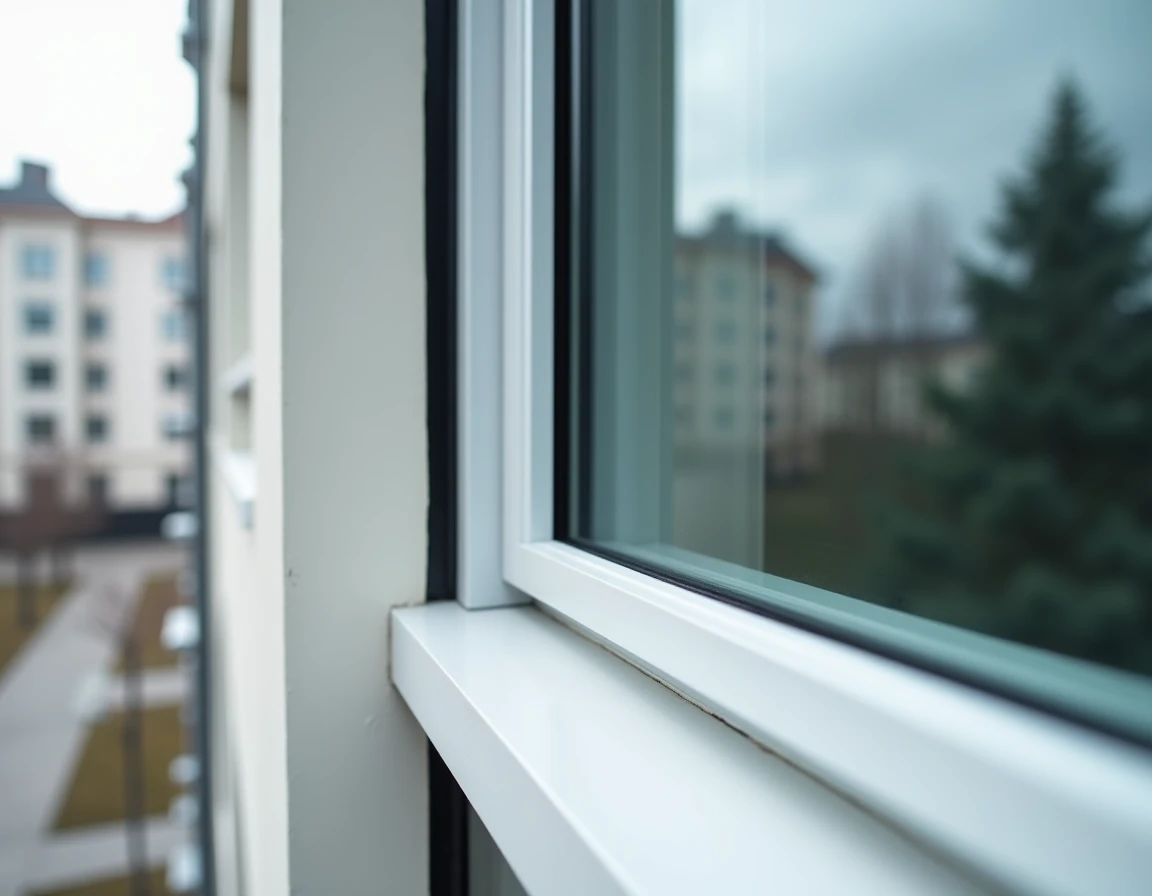
When installing an opening frame, the weight of the glazing is distributed between the hinges and the frame. On a fixed glass, the entire load rests on the frame and the glazing beads. This difference has direct consequences on the sizing of the frame.
With the rise of safety laminated glasses (type P2A) and double glazing with selective layers, the weight of fixed glazing has significantly increased in recent years. Manufacturers of joinery are adapting the section of the frames and the type of glazing beads to accommodate this overload without deformation.
In practice, the positioning in the rebate must be flawless. Rigid support shims are used, positioned at the lower corners of the frame, and side shims to keep the glazing centered.
A rough positioning on a fixed frame does not forgive: the glazing gradually descends under its own weight and eventually creates a point of contact between glass-metal or glass-wood, which is a source of thermal breakage. To better understand the principle of fixed glass on Immobilier et Particuliers, one can refer to the distinctions between daylight and view that condition the choice of this type of glazing.
Fixed glass and thermal performance: adapting glazing to the requirements of RE2020
Since the implementation of RE2020, the thresholds for bioclimatic needs (Bbio) encourage the selection of glazing that maximizes light transmission while limiting excessive solar gains. On a fixed frame, this requirement takes on a particular dimension: no natural ventilation through the opening, thus no summer compensation through ventilation.
Selective layer glasses allow for a balance between light and thermal comfort. Their reduced solar factor limits overheating in summer without darkening the room. In winter, the insulation performance of fixed glazing is often superior to that of an equivalent opening, because the absence of an opening mechanism eliminates weak points in air tightness.
Air tightness and thermal bridges on a fixed frame
A classic opening includes strike seals, locks, and handles, all areas where air can infiltrate. The fixed frame eliminates these passages. The air tightness of fixed glass is structurally better than that of a casement window, provided that the seal between the frame and masonry is properly treated.
The critical point remains the frame-wall connection. Two situations are distinguished:
- In new construction, the frame is sealed in the masonry with continuous sealing (impregnated foam or adhesive sealant). The continuity of the interior vapor barrier must be ensured.
- In renovation, if the old wooden frame is retained, the condition of the wood (rotting, detachment) must be checked before fixing the new fixed frame on top. A frame affected by moisture cancels out all thermal gains from the new glazing.
- When installing on external thermal insulation (ITE), the frame must be positioned in the plane of the insulation to limit the thermal bridge at the reveal, which sometimes requires specific fixing brackets.
Choosing the frame material for fixed glass: PVC, aluminum, or wood
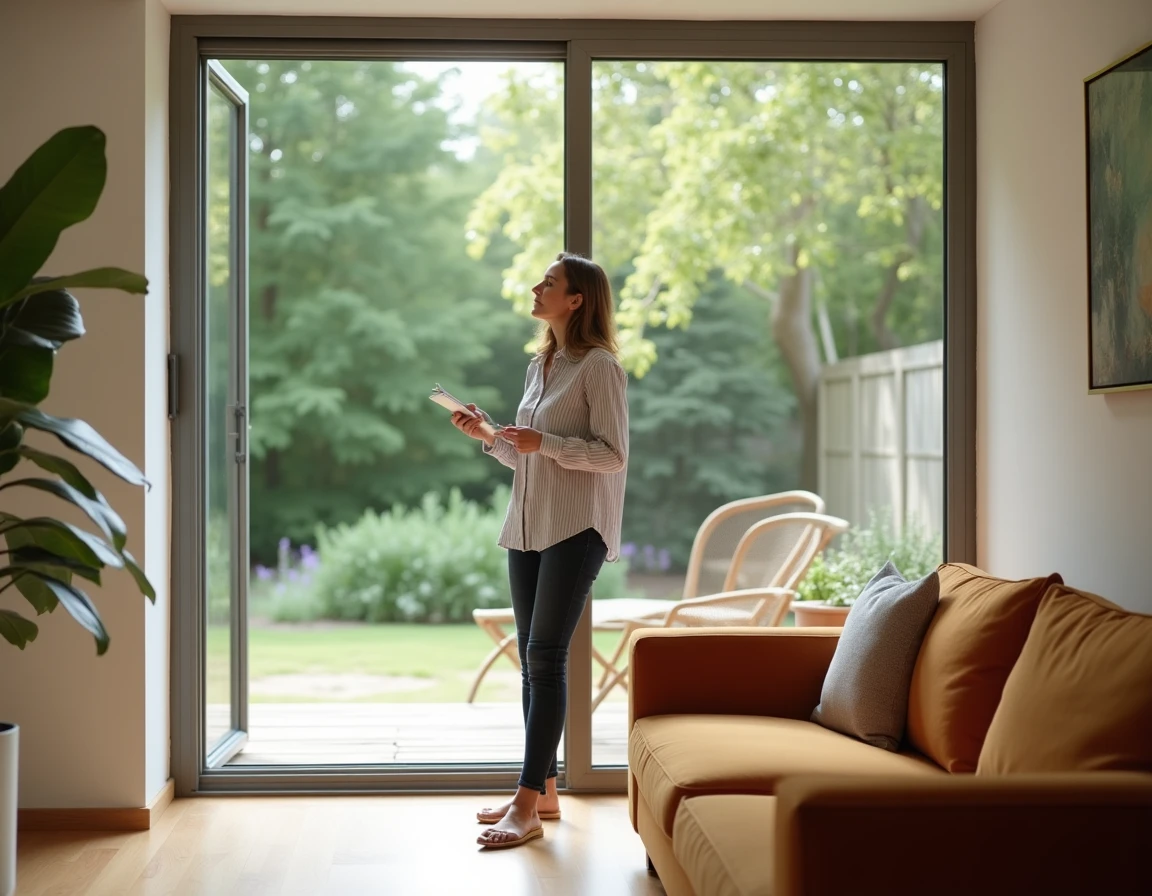
The material of the frame does not have the same impact on fixed glazing as it does on opening windows. On an opening, the rigidity of the frame determines proper closure and the holding of hardware. On a fixed frame, it is the dimensional stability over time and resistance to deformation under load that matter.
PVC: the most common in residential settings
PVC remains the dominant choice for fixed joinery in housing. Its thermal performance/price ratio is hard to beat. Feedback varies on this point, but reinforced steel PVC profiles are suitable for most common dimensions. Beyond a certain glazed area, the bending of the profile can become problematic, and aluminum becomes preferable.
Aluminum: large surfaces and contemporary architecture
Thermal break aluminum allows for the creation of large fixed frames with slim profiles. It is the material found in workshop skylights, residential curtain walls, and fixed corner windows. Its structural rigidity easily supports the weight of thick laminated glazing.
Wood: performance and maintenance constraints
Wood offers excellent natural insulation performance, but a fixed wooden frame exposed to the elements requires regular maintenance (stain or paint every few years). Indoors or under a roof overhang, wood remains a relevant and durable choice.
Installing fixed glass in renovation: concrete pitfalls to avoid
Installing a fixed frame seems simpler than installing an opening. No hardware adjustments, no checking the plumb of the sashes. This apparent simplicity hides frequent mistakes.
- Neglecting the measurement of dimensions: on an old structure, window reveals are rarely square. A gap of a few millimeters is enough to prevent the installation of the frame or to create gaps between the frame and masonry.
- Forgetting compensatory ventilation: fixed glass does not ventilate. If replacing an opening window with a fixed frame, it is necessary to provide an air inlet elsewhere in the room to comply with the regulatory flow rates of the mechanical ventilation system.
- Confusing “daylight” and “view” in the sense of the Civil Code: a translucent fixed glass (frosted or printed glass) creates legal daylight. A transparent fixed glass creates a view, subject to minimum distances from the property line.
Fixed glass remains a simple and effective solution to gain brightness without complicating the joinery. Its installation requires less hardware, but the same rigor in positioning, sealing, and adherence to urban planning rules. Before ordering, checking the condition of the reveal, measuring at three points (top, middle, bottom), and anticipating the ventilation of the room makes all the difference between a successful installation and a project that needs to be redone.