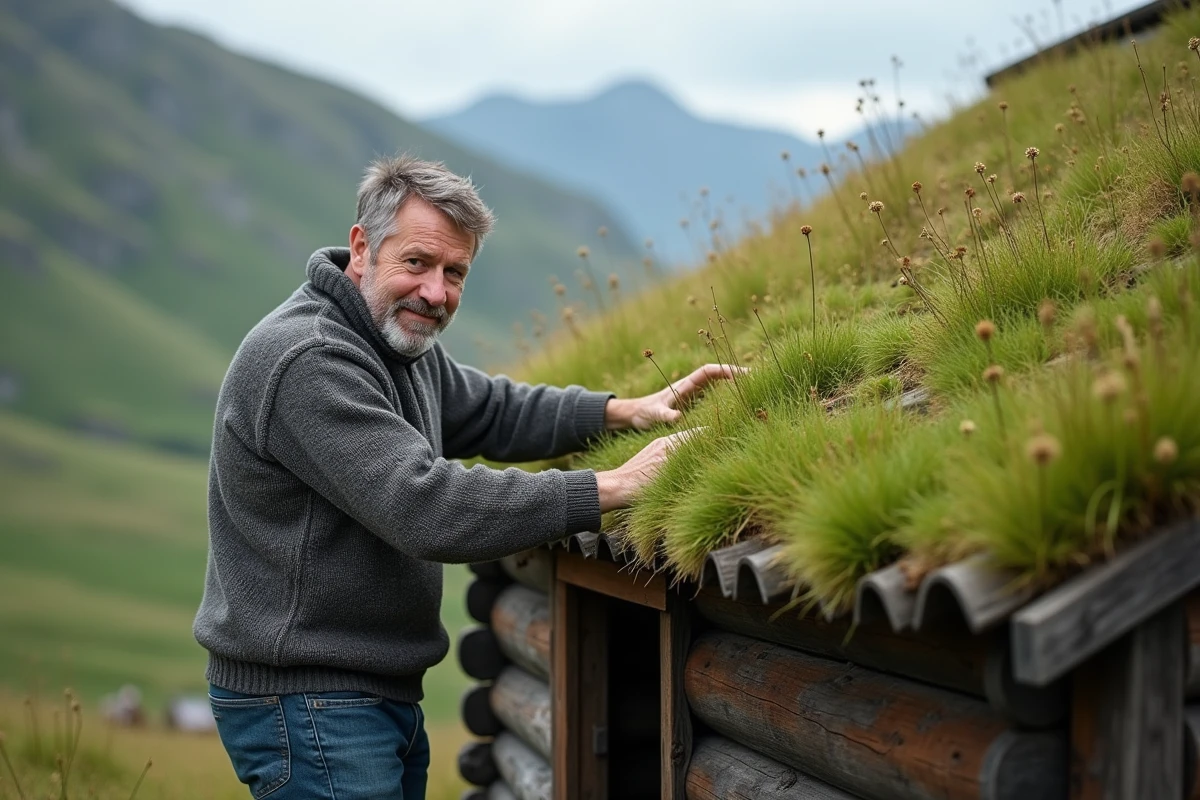
Some Norwegian constructions violate the expected standard of tile or slate roofs. Since the Middle Ages, moss, grass, and other local plants have made their way onto homes, despite a harsh climate and surprising maintenance constraints.
This choice, far from being a mere architectural curiosity, relies on techniques passed down through generations and a millennia-long adaptation to regional resources. Grass roofs persist today where other traditions have disappeared, defying the modern standardization of housing.
An iconic landscape: grass roofs, witnesses of Norwegian history
In the northern valleys and on the steep shores of the fjords, wherever Norway turns wild, one detail stands out: the green roof. It is impossible to traverse these landscapes without noticing these thick, green coverings that seem to grow naturally on the houses. Since the Viking era, this way of covering homes has established itself, the result of a pragmatic yet bold adaptation to the harsh Norwegian climate. On sturdy farms, wooden stave churches, and chalets lost in the mountains, this technique has taken root over generations and shapes part of the Scandinavian heritage.
But it is not just a matter of aesthetics or folklore. Choosing a green roof means opting to integrate the habitat into the landscape, blurring the boundary between built and nature. This grass roof is an ally against the cold, a barrier against the elements, a temperature regulator, while promoting biodiversity. A miniature ecosystem settles on each house, sheltering insects and birds, and extending the rural identity of the country. Through this tradition, Norway affirms a culture based on harmony with the environment and the transmission of know-how.
This gesture can be found everywhere, from the south to the north of the country. Massive farms, solid frameworks, lush grass on the ridge: the image is typical. Some churches, classified by UNESCO, still display these thick roofs today, true living carpets. Each region modifies the technique according to its resources and history, but the spirit remains: adapting the habitat to nature, not the other way around. For those wishing to delve deeper into this heritage, learning more about Essentium allows for a detailed exploration of this history and its relevance today.
How plants traveled to the roofs: medieval influences and botanical exchanges
Under the Norwegian eaves, each species tells a chapter of adaptation. Local grasses, robust mosses, Nordic grasses, as well as thyme, chives, and other herbs; all find their place on these roofs. This diversity is no accident. Over the centuries, between the 9th and 13th centuries, artisans, travelers, and merchants transported seeds, exchanged cuttings, and enriched the plant landscape. Alliums, wild carnations, field flowers: each new variety was tested, sometimes adopted, sometimes abandoned.
The technique itself has refined generation after generation. Layers are stacked: wood, birch bark, soil, and then the plants. Each chosen plant has been selected for its ability to survive frost, drought, and erosion. External influences from Iceland, the Faroe Islands, and the continent have gradually enriched this botanical repertoire. Sedum, for example, now common on extensive green roofs, arrived from Asia before conquering Europe. Its robustness and ease of maintenance have made it a natural choice.
Choosing the plants on one’s roof was not just a matter of decoration. It was also about cultivating what was needed: herbs for cooking, medicinal plants, or species serving as natural protection. Thus, each roof becomes a reflection of exchanges and collective memory, a living mosaic where local traditions and influences from elsewhere intertwine.
Where to admire and understand this tradition today: sites, events, and cultural experiences in Norway
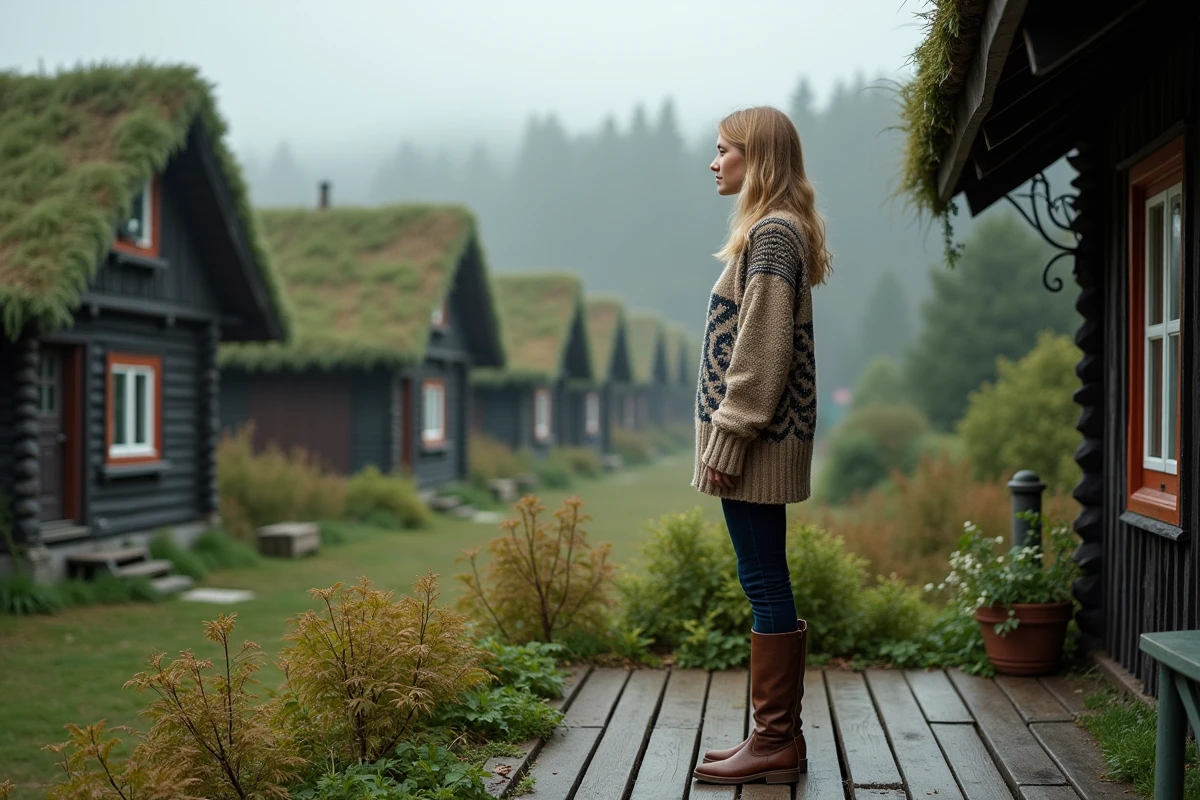
This tradition endures, clearly visible to anyone traveling through Norway. In Oslo, the open-air museum showcases numerous traditional houses topped with grass, providing a concrete experience of this heritage. On the roads of the Lofoten Islands, farms and chalets are adorned with green roofs, blending into the natural scenery, reminding us of the ancestral link between habitation and environment.
Several places and initiatives allow for a close approach to this craftsmanship:
- The Norwegian Museum of Cultural History in Bygdøy presents a remarkable collection of farms and wooden stave churches, reflecting the evolution of green roofs since the Viking era.
- In summer, the Scandinavian Green Roof Association hosts numerous events, raising awareness about biodiversity and the ecological impact of these practices.
These initiatives breathe new life into the tradition. Conferences, guided tours, practical workshops: all opportunities to understand the current challenges of green roofing. Topics include thermal insulation, rainwater management, energy transition, and sometimes even the integration of solar panels. The grass roof is no longer just a heritage; it becomes a ground for innovation, a subject of study for urban planners and researchers.
Over the years, these living coverings shape the landscape, limit temperature variations, and serve as a refuge for local wildlife. They help filter pollutants and reduce CO2 emissions. In Norway, each grass roof is a page of history, but also a promise: that of a future where architecture and nature continue their dialogue, never turning their backs on each other.